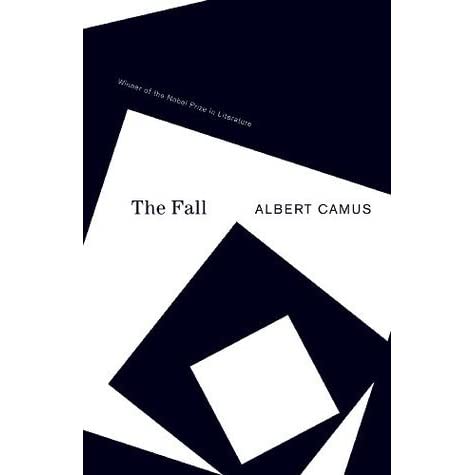
I couldn’t tell you where I found this book. I might have received it from the Marines in supply giving books away. I may have found it striking because of the interesting black and white cover and the author I might have heard.
The Fall by Albert Camus is narrated by Jean-Baptiste Clamence and he directly talks to the reader. Clamence lives his life as a defense lawyer and is a “good doer” until one night his world changes when he begins hearing laughter coming from the water. It was the realization that Clamence has faults and that his inability to save the woman from commiting suicide in the water. He remarks something along “
The laughter could be tied to judgment. Judgment from who?
After reading this, I shouldn’t be skeptical of the world and all the people in it. People have their motives, selfishness, and their own worlds to pursue pleasure. While others in high positions seek acclaim to do good and hide skeletons in their closets. I do believe there are good people out there. We all have faults and our salvation should not come from accepting judgment for ourselves. We should accept our faults and shortfalls, but not in the pursuit of being above others. A God complex, and that someone will be a slave to me and that i would lead them to believe they are free. No one in this day in age is obligated to stay with me.
Albert Camus portrays Clamence as someone who is self aware and conscious of his own actions after the “fall”. He is aware of his actions and perception of “tipping his hat” to the blind man. The blind man can not see him tipping his hat but it is for those who are watching him. It was a game or play. He was an actor making an effort to win approval of others and to possibly exploit others when the time arises.
On religion, There is a theme of “God is dead” and is no longer a part of the world and that it is men who have taken the mantle to judge. Throughout the book there are some notes that Clamence makes that How can man judge when everyone is at fault for a crime of some sort. that those in high positions avoid being judged because of their resources. while the lower class have to muddle through with each other.
While at first, it challenges my faith to consider being more skeptical of religion. The idea that Clamence near the end of the book looks at the flakes falling down in Amsterdam and hoping to have salvation even with his decision of not believing (find evidence from book).
There are many themes while reading including: Truth, judgment, mortality, religion, and power. These were a few that were worth noting. I would recommend to myself to read this book in later years for another interpretation.
I found a user on good reads that made valid points and it is worth noting to myself. User: Glenn Russell‘s on goodreads.
One plays at being immortal and after a few weeks one doesn’t even know whether or not one can hang on till the next day.”
― Albert Camus, The Fall
“A single sentence will suffice for modern man: he fornicated and read the newspapers.” So pronounces Jean-Baptiste Clamence, narrator of Albert Camus’s short novel during the first evening of a monologue he delivers to a stranger over drinks at a shabby Amsterdam watering hole. Then, during the course of several evenings, the narrator continues his musings uninterrupted; yes, that’s right, completely uninterrupted, since his interlocutor says not a word. At one point Clamence states, “Alcohol and women provided me, I admit, the only solace of which I was worthy.” Clamence, judge-penitent as he calls himself, speaks thusly because he has passed judgment upon himself and his life. His verdict: guilty on all counts.
And my personal reaction to Clamence’s monologue? Let me start with a quote from Carl Jung: “I have frequently seen people become neurotic when they content themselves with inadequate or wrong answers to the questions of life. They seek position, marriage, reputation, outward success of money, and remain unhappy and neurotic even when they have attained what they were seeking. Such people are usually confined within too narrow a spiritual horizon.” Camus gives us a searing portrayal of a modern man who is the embodiment of spiritual poverty – morose, alienated, isolated, empty.
I would think Greco-Roman philosophers like Cicero, Seneca, Epictetus, or Marcus Aurelius would challenge Clamence in his clams to know life: “I never had to learn how to live. In that regard, I already knew everything at birth.”. Likewise, the wisdom masters from the enlightenment tradition –- such as Nagarjuna, Bodhidharma and Milarepa — would have little patience listening to a monologue delivered by a smellfungus and know-it-all black bile stinker.
I completed my reading of the novel, a slow, careful reading as is deserving of Camus. The Fall is indeed a masterpiece of concision and insight into the plight of modern human experience.
Here is a quote from the Wikipedia review: “Clamence, through his confession, sits in permanent judgment of himself and others, spending his time persuading those around him of their own unconditional guilt.”
Would you be persuaded?”
References:
Goodreads. (1991, May 7). The fall by Albert Camus. Goodreads. Retrieved June 26, 2022, from https://www.goodreads.com/book/show/11991.The_Fall
Shmoop Editorial Team. (2008, November 11). The fall introduction. Shmoop. Retrieved June 26, 2022, from https://www.shmoop.com/study-guides/literature/the-fall
 Inspired Knight